银魂 真人版
From an online "weight-loss hack" to protective manicures: The humble bean that connects harvest, community and home in Shandong_我的网站

A |
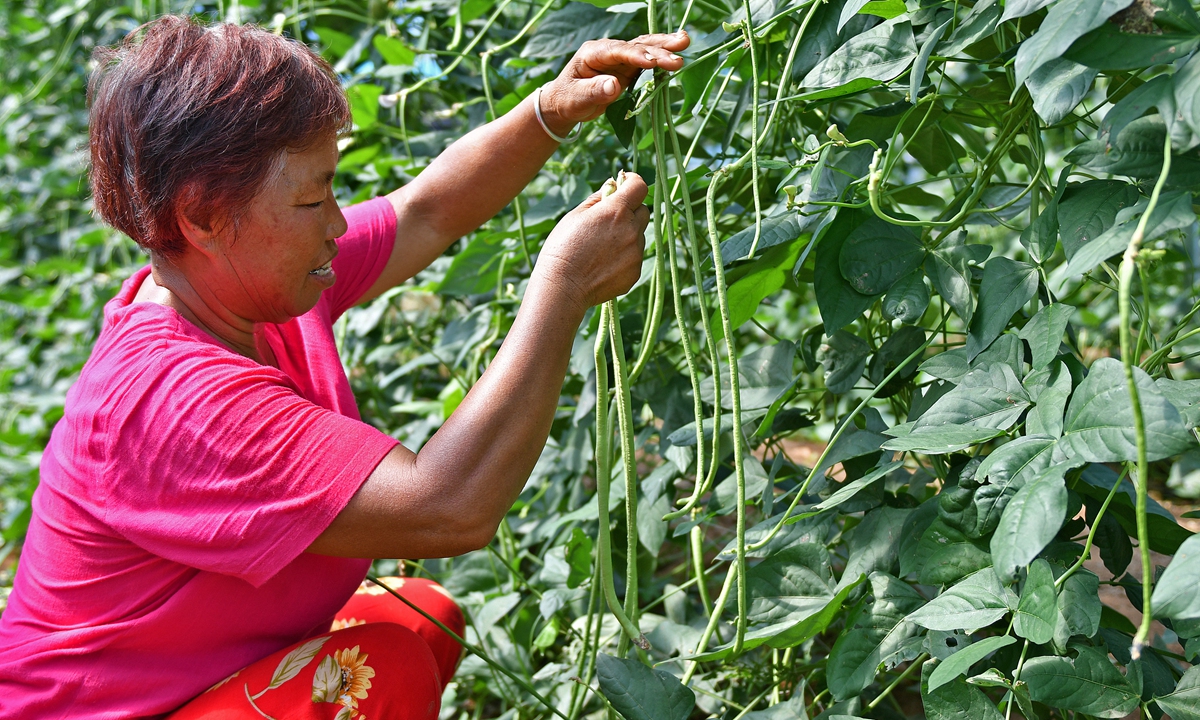
A farmer harvests green beans at a vegetable production base in Yantai, East China's Shandong Province, on August 21, 2024. Photo: VCGA viral internet joke about eating raw green beans for weight loss has recently put the humble vegetable in the spotlight. After news reports that a guy lost weight following food poisoning caused by undercooked beans, Chinese netizens jokingly dubbed them a "forbidden weight-loss hack." Others took the joke even further, asking — tongue firmly in cheek — exactly how undercooked the beans needed to be to achieve the "best weight loss effect."
For residents of East China's Shandong Province, however, green beans have never been a miracle diet food or an internet meme. Instead, they are an unmistakable sign that summer has arrived — and, for many families, the beginning of weeks of eating them, giving them away and wondering how on earth there are still more waiting to be picked.
The season of endless beans For Zhao Qian, a Shandong native, summer has always had a familiar color: green.
"When I was little, the moment different bean dishes started appearing on the table day after day, I knew summer had arrived," Zhao told the Global Times. "No matter how many we ate, there were always more. It was as if the vines kept producing beans overnight."
A Chinese saying goes, "Eating beans in summer is better than eating meat." Heat-loving green beans have been cultivated in China for more than one thousand years. Originally introduced from abroad, they gradually found a permanent place on Chinese dining tables thanks to their versatility, nutritional value and ability to fill hungry stomachs, according to an article published by People.cn.
Today, with the rise of greenhouse farming and an increasingly sophisticated cold-chain logistics network, fresh vegetables are available year-round across China. The old rule of eating produce only in season has largely given way to year-round abundance. Yet in Shandong, China's largest vegetable-producing province, green beans remain inseparable from summer. More than an endless seasonal harvest, they have become the taste of home for generations of locals.
One of Zhao's strongest childhood memories wasn't eating the beans, but preparing them.
"Every summer, the adults would hand me a basin full of freshly picked beans and ask me to strip off the tough strings along both sides," she recalled. "I'd sit on a little stool and work through the whole pile. It looked like an easy job, but after peeling bean after bean, my fingertips would start to hurt. By the time I finished one basin, there was always another one waiting."
For many families in Shandong, summer means an endless cycle of picking, eating and sharing green beans. In vegetable gardens, rows of trellises are soon covered in climbing vines. When the peak harvest season arrives, the beans need to be picked almost every day before they become old and fibrous. Those that cannot be finished at home are packed into bags and given to relatives, neighbors and friends.
"Your family has beans, and so does mine, but we still give them to each other," Cao Yu, a Shandong native who grew up on the Jiaodong Peninsula in East China, told the Global Times on Wednesday with a laugh.
A plentiful harvest also brings what locals jokingly call "bean freedom" to the dinner table. Sesame-dressed beans, braised beans with pork ribs and, above all, bean-filled steamed buns — a dish mentioned by almost every Shandong native interviewed by the Global Times. For many people, these dishes are no longer simply seasonal food, but the familiar taste of summer, family and hometown.
The hands that harvest summer Behind the seemingly endless harvest is another busy summer ritual — picking. For many elderly farmers, harvesting green beans means spending hours each day moving from one trellis to another, reaching through dense vines and picking bean after bean by hand.
A nail salon in Jining, Shandong Province, recently went viral after offering free "bean-picking manicures" to residents aged 60 and above. Instead of fashionable designs or glittering decorations, the salon applies thicker, longer nail extensions that make it easier to pinch and snap off the beans while protecting fingertips from pain. A coat of colored polish is added simply to help conceal stains left by vegetable sap, according to video clips circulating on Chinese social media platforms Douyin and Sina Weibo.
The salon owner, herself the daughter of farmers, said thumb injuries and damaged fingernails are common during the bean-picking process. In videos posted on her Douyin account, many elderly women said the manicures made picking beans much easier. Even more amusingly, some older men initially refused to get a manicure, only to change their minds after hearing enthusiastic recommendations from the "grandmas' group."
For perhaps the first time, beauty took a back seat to practicality, and a manicure became another way of caring for hardworking hands.
While the internet continues to joke about undercooked beans as a shortcut to weight loss, doctors stress there is nothing amusing about eating them raw. Liang Jiajing, a clinical nutritionist at the Second Affiliated Hospital of Anhui Medical University, said raw or undercooked beans contain naturally occurring toxins that can cause nausea, vomiting, abdominal pain and diarrhea, but the toxins are destroyed through thorough cooking, according to a Jimu News report.
The internet may remember green beans as the latest viral "weight-loss hack." In Shandong, however, they tell very different stories — one of overflowing harvests, bags of beans exchanged between neighbors, family recipes passed down through generations, and hardworking hands that quietly bring the harvest to the table. Long after the online jokes fade, the taste of summer — and of home — remains.
。 《日报》全媒体记者薛利超 王岩 周莉 崔迪
今年以来,兴城市坚持实用导向、融合导向、需求导向,聚焦关心关注老年人、失业待业人员、新业态从业人员等特殊群体,精心打造“老年助餐店”“爱心驿站”“梦想起航‘孵化巢’”,丰富城市党建服务“微载体”,让基层治理不仅有招法,更有温度。
“小驿站”蕴藏“大温暖”
党建引领让新就业群体融入城市家园
走进宁远街道河畔社区爱心驿站,“家”的感觉扑面而来,这里环境干净整洁、温暖舒适。

B | 休息座椅、微波炉、饮水机、医疗急救包、工具箱、报刊书籍等设施用品一应俱全,为环卫工人、外卖员、快递员等户外工作群体及过往群众提供免费服务。大家可以来这里喝水、充电、休息、阅览图书,从“小微”贴心服务做起,打造群众身边的“便民休息圈”。外卖员吴晓宇是驿站的“常客”,进门便熟练地坐到靠墙的座椅上给手机充电,“这里是我的‘紧急充电站’,以前送餐的时候可没这好地方,现在这儿不仅可以给手机充电,还可以给饭加热,自己也能休息一下,方便多了。”
目前,兴城市结合快递小哥、外卖骑手活动轨迹等重点区域,按照就近就便原则,利用社区党群服务中心场地建设爱心驿站6处,让更多的户外劳动者有需求时能够找到驿站、找到组织,解决他们的“小事情”“小难题”。

C | 同时,快递员、外卖员等新业态群体也主动参与到社区治理中来,做社区“流动网格员”“兼职信息员”,为社区矛盾调处、安全隐患排查、环境整治等工作献计出力。今年以来,他们向社区提出的意见中有38条被采纳。
“小食堂”彰显“大爱心”
党建引领让老年人安享幸福晚年
今年以来,兴城市深入推进老年助餐暖心工程,鼓励各类市场主体参与老年助餐服务,探索“党建引领+餐饮企业+老年助餐+志愿服务”的模式,建立老年助餐服务的长效机制。?
临近中午时分,贺大娘老年助餐店内饭菜飘香,20余种荤素搭配的菜肴可随意挑选。这是为65周岁以上老年人提供的助老午餐,每位老人享受全部菜品7折优惠。

D | “在这里吃饭环境好,每天饭菜还不重样,又很方便,钱存在卡里后,过来刷一下就行了,都不用每次掏钱。”在这里用餐的老人刘永高兴地说。
截至目前,兴城市共建立老年助餐点6个,提供“堂食+上门助餐”服务1000余人次,在餐饮加工关键环节实施“明厨亮灶”,接受公众监督,有效解决了老人做饭难、吃饭难问题,让子女在外放心、老人在家暖心。
“小巢穴”解决“大问题”
党建引领让失业待业人员重启职业航程
兴城市致力于打造充分就业社区,搭建梦想起航“孵化巢”,通过精细化网格管理,了解辖区居民、毕业未就业大学生情况,建立就业管理台账。
居住在温泉社区的李辰,近期因为失业断了生活来源,心情焦虑,情绪急躁,经常与妻子发生口角,邻里相处也不愉快。社区网格员得知后,第一时间上门了解具体情况。将李辰的个人信息、擅长领域等仔细登记,再与锦晟驾校要求进行匹配,很快便帮助李辰在驾校找到了合适工作。李辰感激地说,“多亏了社区的帮助,让我的生活又回到了正常轨道,心情敞亮多了。

E | ”
兴城市集合社区、街道力量与市委组织部、市人社局、市就业中心、市人才中心和辖区企业联系,开展联合招聘会,组建社区就业信息微信群,及时将就业信息精准推送,对辖区内“零就业”家庭进行帮扶,为6名居民找到了工作岗位。
把党组织的作用发挥好,把老百姓的需求解决好,是破解基层治理难题的关键。创新工作思路、丰富工作内容,以各具亮点的党建服务“微载体”打造,有效激发基层治理“红色效能”,让特殊群体感受到实实在在的温暖和关怀,使兴城市服务特殊群体举措更具体,更有“力量”和“温度”。接下来,兴城市将结合“我为群众办实事”“幸福新社区创建”等活动,进一步完善养老服务体系,优化新就业群体服务体系,健全就业帮扶体系,全面提升基层服务水平,实现城市建设成果人人共享,不断增强人民群众的获得感、幸福感、安全感。
Current article:http://t3j.shuazhepenxingshuaisenqienai.buzz/r65eeb/loxh0.html
Published on:12:15:29


